Rates guide
How to make an influencer rate card (with example prices)
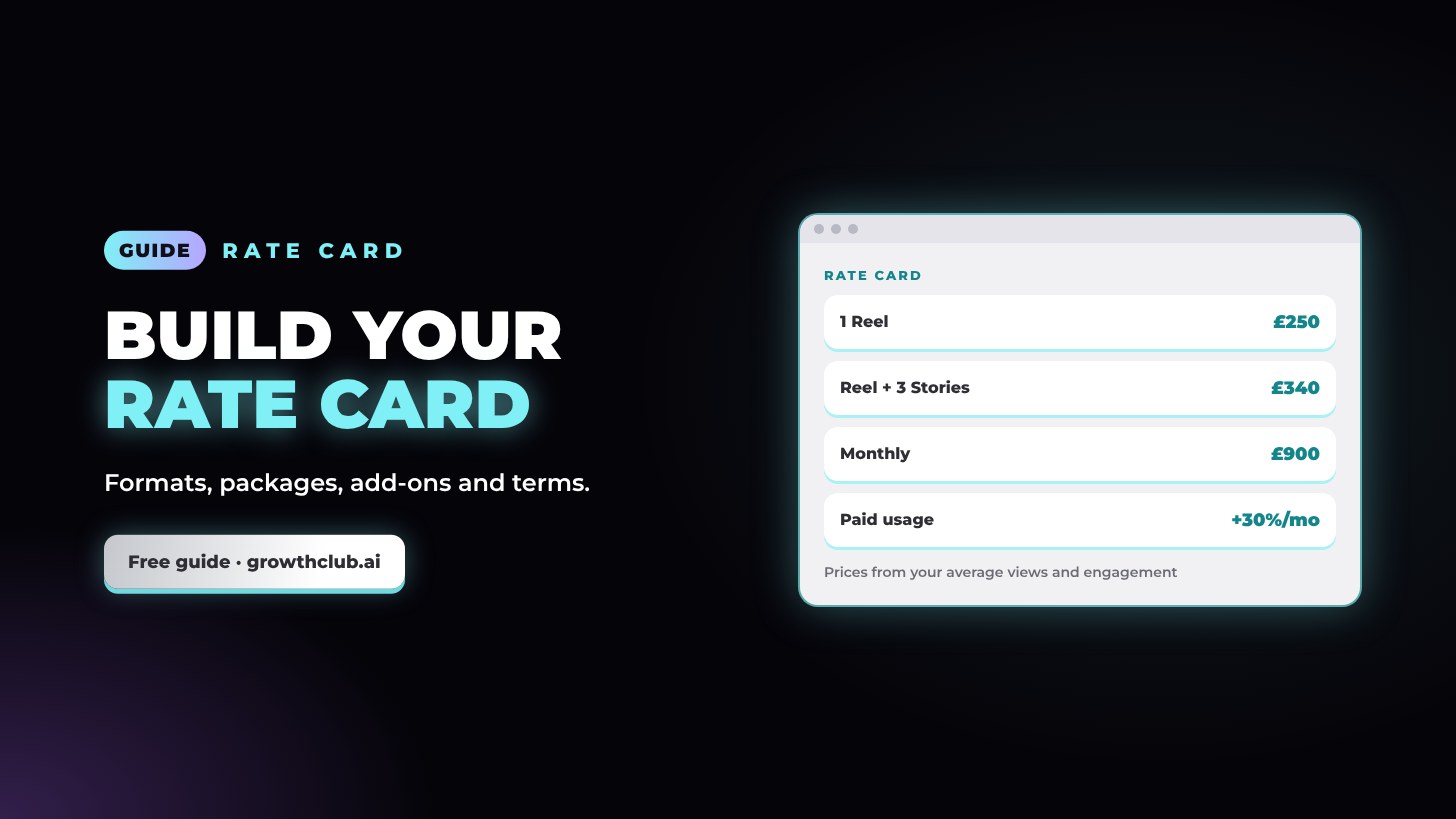
A rate card is a one-page list of what you offer brands and what it costs: each format with a price, two or three packages, the add-ons you charge for (paid usage, exclusivity, rush) and your basic terms. It saves back-and-forth, filters out brands without budget and makes you look established. Here’s what to include, an example, and how to work out the numbers.
Rate card vs media kit
- Media kit: who you are, your audience, numbers and past work. It sells you.
- Rate card: what you offer and the prices. It sells a deal.
Many creators put a short rate card at the end of their media kit, or keep it separate and send it when a brand asks for rates. Either works. Our guide to making a media kit covers the other half.
What to include
- Formats and prices: each deliverable you sell, with a price or “from” price.
- Packages: two or three bundles at a better price than buying the parts.
- Add-ons: paid usage, exclusivity, raw footage, rush delivery, extra revisions.
- What’s included: for example one revision round, organic posting, a link in bio for 7 days, a results report.
- Terms: turnaround time, payment terms (deposit, due date), currency and VAT (only add VAT if you’re VAT-registered: check HMRC guidance or ask an accountant).
- Validity: “Rates valid until [date]”, so you can update them.
Example rate card
Here’s an example for a lifestyle creator with about 30,000 Instagram followers, 15,000 average Reel views and a TikTok averaging 20,000 views. (Your prices should come from your own numbers.)
| Deliverable | Price |
|---|---|
| 1 Instagram Reel (30 to 60 seconds) | £250 |
| 3 Instagram Stories with link | £120 |
| 1 TikTok video | £320 |
| Carousel post (up to 10 slides) | £220 |
| Package: Reel + 3 Stories | £340 (save £30) |
| Package: Reel + TikTok | £520 (save £50) |
| Monthly: 2 Reels + 6 Stories | £900 a month (3-month minimum) |
| Add-on | Price |
|---|---|
| Paid usage (partnership ads or Spark Ads) | 30% of the fee per 30 days |
| Category exclusivity, 30 days | +20% |
| Rush delivery (under 10 days) | +30% |
| Raw footage | +30% |
| Extra revision round | £40 |
Includes one revision round, organic posting on my channels and a results report 7 days after posting. 50% deposit for new clients, balance within 14 days of posting. Prices exclude VAT. Valid until 31 December 2026.
How to work out your numbers
- Start with your average views for each platform (last 10 to 15 posts, ignoring one-off viral hits).
- Apply a CPM for each format, or use the rate calculator, which uses the same method as Brand Deals HQ.
- Sense-check against benchmarks for your size in our guide to influencer rates.
- Round to clean numbers and price packages 10% to 20% below the sum of their parts.
- Set add-on percentages you can explain: see usage rights pricing.
Show prices, or “from” prices?
- Exact prices speed things up and filter out low budgets. Best when you sell standard packages.
- “From” prices (“Reels from £250”) leave room to quote for complex briefs.
- Rates on request suit creators whose prices vary a lot by brand and usage. Keep a rate card ready to send anyway.
Presenting it well
- Keep it to one page (or one section of your media kit).
- Put your most popular package in the middle and highlight it: brands often choose it.
- Use the brand’s currency where you can (£, $ or €).
- Update it every 3 months, or when your numbers change.
Make a pitch-ready media kit in minutes: 12 ready-made looks, your stats and rates, a QR code, a share link and a PDF download. Brands only ever see you.
Create my account and try itIt’s free with a Growth Club account.Frequently asked questions
What is an influencer rate card?
A short document listing the content you offer brands and what each piece costs, plus packages, add-on fees and your terms.
Should I put my rates in my media kit?
You can. Many creators add a rate card or packages section at the end of their media kit. Others keep rates separate and send them on request. Have one ready either way.
How often should I update my rate card?
Every three months, or whenever your average views, engagement or demand change noticeably. Add a “valid until” date so old copies don’t hold you to old prices.
Should I include paid usage on my rate card?
Yes, as an add-on, not included in the base price. A clear percentage per month (for example 30% per 30 days) makes the conversation much easier.
Do I need different rate cards for each platform?
One card can cover every platform, with a section per platform. Price each platform on its own average views.
Good to know: this guide is general information, not legal, tax or financial advice. Rates and earnings are estimates, not promises, and platform rules change, so check the official pages we link to. Instagram, TikTok, YouTube, Facebook, Threads, X, LinkedIn and the other names mentioned are trademarks of their owners; Growth Club isn’t affiliated with or endorsed by them.