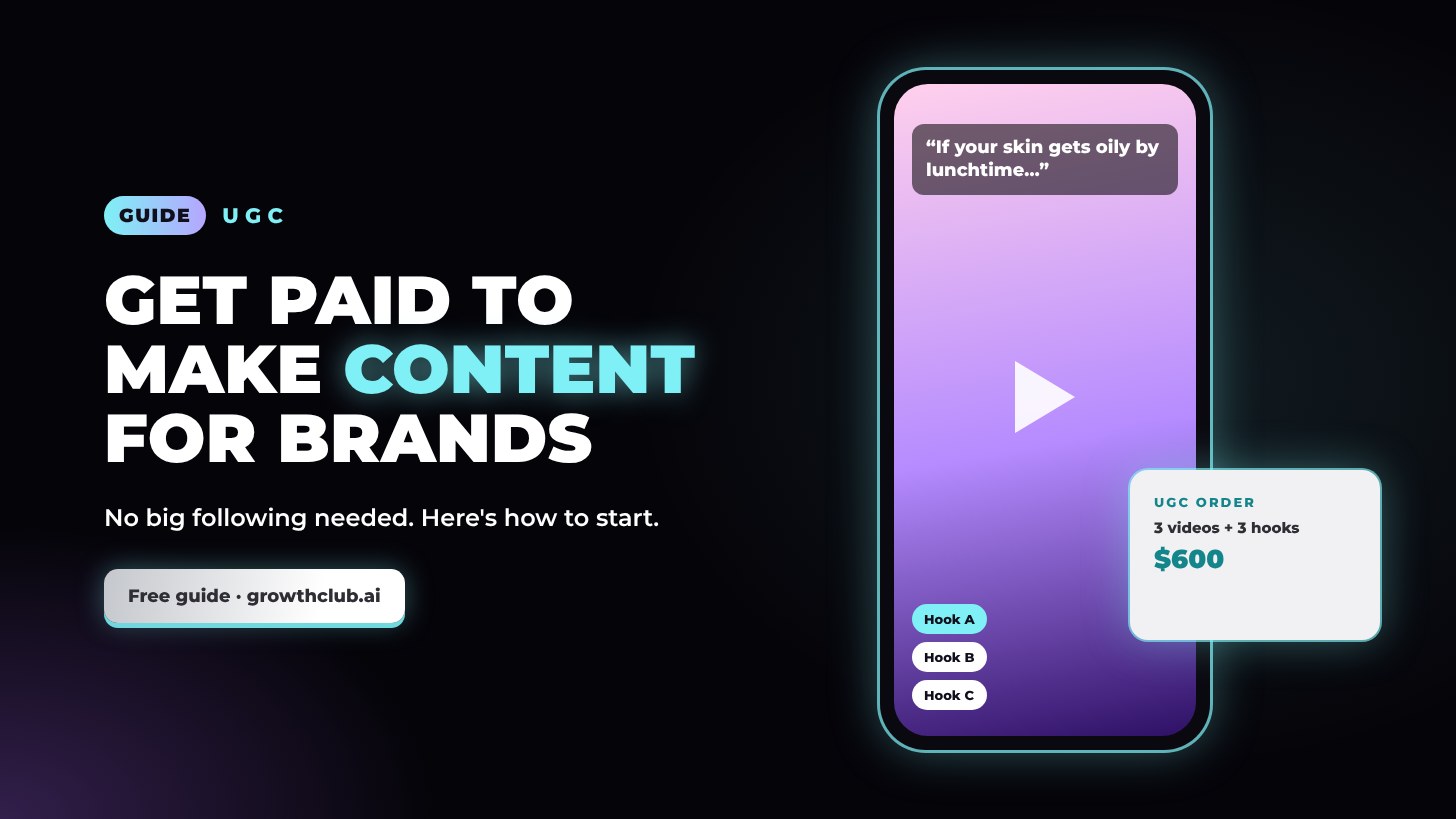
UGC guide
How to become a UGC creator in 2026 (no big following needed)
A UGC (user-generated content) creator gets paid to make photos and videos that brands use on their own channels and in their ads. You don’t need a big following, because you usually don’t post the content yourself: brands pay for natural-looking, persuasive content, not your reach. To start, pick a niche, make three to five sample videos, put them in a portfolio, set your rates and pitch brands that already run creator-style ads. Here’s each step.
What UGC is (and isn’t)
| UGC creator | Influencer | |
|---|---|---|
| Who posts it | The brand, on its accounts and in ads | You, on your channels |
| What the brand pays for | The content | Your audience and reach |
| Followers needed | None | Depends on the deal |
| Usage rights | Central to the deal | Often an add-on |
Brands buy UGC because creator-style videos often feel more trustworthy than polished ads, and they need lots of variations to test. Many creators do both: sponsored posts for their audience, and UGC on the side.
What you need to start
- A recent smartphone that films in 4K, or at least 1080p.
- Natural light (a window) or one simple ring light or LED light.
- A clip-on microphone if you’ll talk to camera: sound quality matters more than you think.
- A simple editing app. CapCut or Edits (Instagram’s free editing app) are plenty.
- A tidy, neutral filming spot, and good lighting on your face and the product.
Step 1: Choose your niches
Pick two or three niches you know and can film easily at home: skincare, haircare, supplements, pet products, kitchen gadgets, apps, home and cleaning, baby products, fitness gear. Brands value creators who understand the product’s customers. Supplements, skincare and baby products come with extra advertising rules, so stick to the claims the brand has approved.
Step 2: Make 3 to 5 sample videos
Use products you already own and make each video in a different style:
- Unboxing and first impressions
- Problem and solution (“If your skin gets oily by lunchtime…”)
- Tutorial or how-to
- Testimonial (talking to camera about results)
- Aesthetic B-roll (no talking, satisfying product shots)
Keep each one 15 to 45 seconds, vertical (9:16), with a strong hook in the first two seconds and on-screen captions. Only describe what you’ve genuinely experienced: the UK’s CAP Code requires testimonials in ads to be genuine, and the US FTC bans fake ones.
Step 3: Build your portfolio
Put your samples into a portfolio, labelled as personal projects, with a short About section, the niches you cover, your services and contact details. Add results as soon as you have them. Our guide to creator portfolios shows exactly what to include.
Put your best work in a portfolio brands can scroll: covers, galleries, results and a share link, ready in minutes. Brands only ever see you.
Create my account and try itIt’s free with a Growth Club account.Step 4: Set your rates
UGC is usually priced per video, with add-ons. Marketplace averages sit around $150 to $200 per video, beginners often start around $100 and experienced creators charge $500 or more, before usage rights. See our full guide to UGC rates.
Step 5: Find brands that buy UGC
- Brands already running creator-style ads: search your niche in the Meta Ad Library (facebook.com/ads/library) and TikTok Creative Center. If their ads look like UGC, they buy it.
- Direct-to-consumer brands that sell online and launch products often.
- UGC and creator marketplaces, where brands post briefs.
- Agencies that produce UGC for several brands.
- Brands you already buy from.
More ideas in how to find brands to work with.
Step 6: Pitch with your portfolio
Send pitches to business addresses only, such as a brand’s marketing or partnerships email. Say who you are, keep the subject line accurate, give them an easy way to opt out, and if someone asks you to stop, stop. Our pitching guide covers the email rules in full.
Subject: UGC for [Brand]: [product] videos for your ads
Hi [First name],
I’m [Name], a UGC creator specialising in [niche]. I noticed you’re running creator-style ads for [product], and I’d love to make some for you.
Here’s my portfolio: [link]. A few ideas for [product]:
- [Hook idea 1]
- [Hook idea 2]
- [Format idea, e.g. problem and solution]
I deliver vertical videos with captions and two hook variations, usually within [5 to 7] days. Would you like my rates?
[Name]
Step 7: Deliver like a pro
- Confirm the brief: product, key messages, claims to avoid, formats, deadline.
- Film a few hook options and extra B-roll.
- Deliver organised files: clear names, 9:16 by default, versions with and without captions and music if asked. If you add music, use tracks licensed for commercial use or supplied by the brand: popular songs usually aren’t cleared for ads.
- Agree usage rights in writing: how long the brand can run your content as ads and where (usage rights pricing).
- Invoice on delivery, with payment terms agreed upfront.
Common mistakes new UGC creators make
- Weak hooks. The first two seconds decide whether the ad works.
- Over-polished videos. UGC should feel natural and personal, not like a studio ad.
- Giving away perpetual usage for a one-off fee.
- Too broad a niche. “I do everything” is harder to hire than “I make skincare and wellness UGC”.
- No contract. Agree the fee, deliverables and usage in writing: even a confirmation email helps. For big, long or exclusive deals, ask a lawyer to check the contract, and if you’re under 18, a parent or guardian usually needs to sign.
Frequently asked questions
Do you need followers to be a UGC creator?
No. Brands buy UGC for the content, not your audience, because they post it on their own channels and run it as ads.
How much do UGC creators make?
Per video, published marketplace averages sit around $150 to $200, with beginners around $100 and experienced creators charging $500 or more, plus usage rights. What you earn overall depends on how much work you win. See UGC rates.
What equipment do I need for UGC?
A recent smartphone, good natural light or a simple light, a clip-on mic for talking videos and a free editing app. Clean framing and clear sound matter more than expensive kit.
How do I get my first UGC client?
Make three to five sample videos with products you own, build a portfolio, then pitch brands already running creator-style ads in your niche. Offer two or three specific hook ideas in your first email.
Do UGC creators post the content on their own accounts?
Usually not. The brand posts it or runs it as ads. If a brand also wants it on your channels, that’s a sponsored post: price it separately and label it as an ad, with “Ad” upfront and the platform’s paid partnership label.
Good to know: this guide is general information, not legal, tax or financial advice. Rates and earnings are estimates, not promises, and platform rules change, so check the official pages we link to. Instagram, TikTok, YouTube, Facebook, Threads, X, LinkedIn and the other names mentioned are trademarks of their owners; Growth Club isn’t affiliated with or endorsed by them.