Portfolio guide
Creator portfolio: what to include to win brand deals
A creator portfolio shows brands your best work, ideally with the results it got: 6 to 12 strong pieces, a few short case studies, a line about who you are, the services you offer and how to contact you. It’s different from a media kit, which sells your audience; a portfolio sells your content. If you make UGC, it’s the single most important thing you’ll send a brand. Here’s what to include and how to build one, even before you’ve done paid work.
Portfolio vs media kit
| Media kit | Portfolio | |
|---|---|---|
| Sells | Your audience and reach | Your content and skills |
| Key content | Audience, followers, average views, engagement | Your best videos and photos, results, services |
| Length | 1 to 3 pages | As long as it takes to show 6 to 12 pieces well |
| Essential for | Sponsored posts on your channels | UGC, content creation, photography, modelling |
Most creators who do both sponsored posts and UGC send both. See our guide to making a media kit.
What to include
1. A cover that sets the tone
Your name, what you do (“UGC creator · skincare and wellness”) and a strong photo. First impressions matter: brands judge your visual taste on page one.
2. A short About section
Two or three lines: what you make, the niches you know, where you’re based, languages you speak, and anything brands should know (equipment, on-camera experience, model stats if relevant).
3. Your best 6 to 12 pieces
Pick work that shows range within your niche:
- Different formats: talking head, voiceover, unboxing, tutorial, before and after, testimonial, product B-roll.
- Different hooks: question, bold statement, problem and solution.
- Vertical (9:16) video first: it’s what most brands buy.
Fewer great pieces beat many average ones. For client work, check your contract lets you show it; if it doesn’t say, ask the brand first.
4. Case studies with results
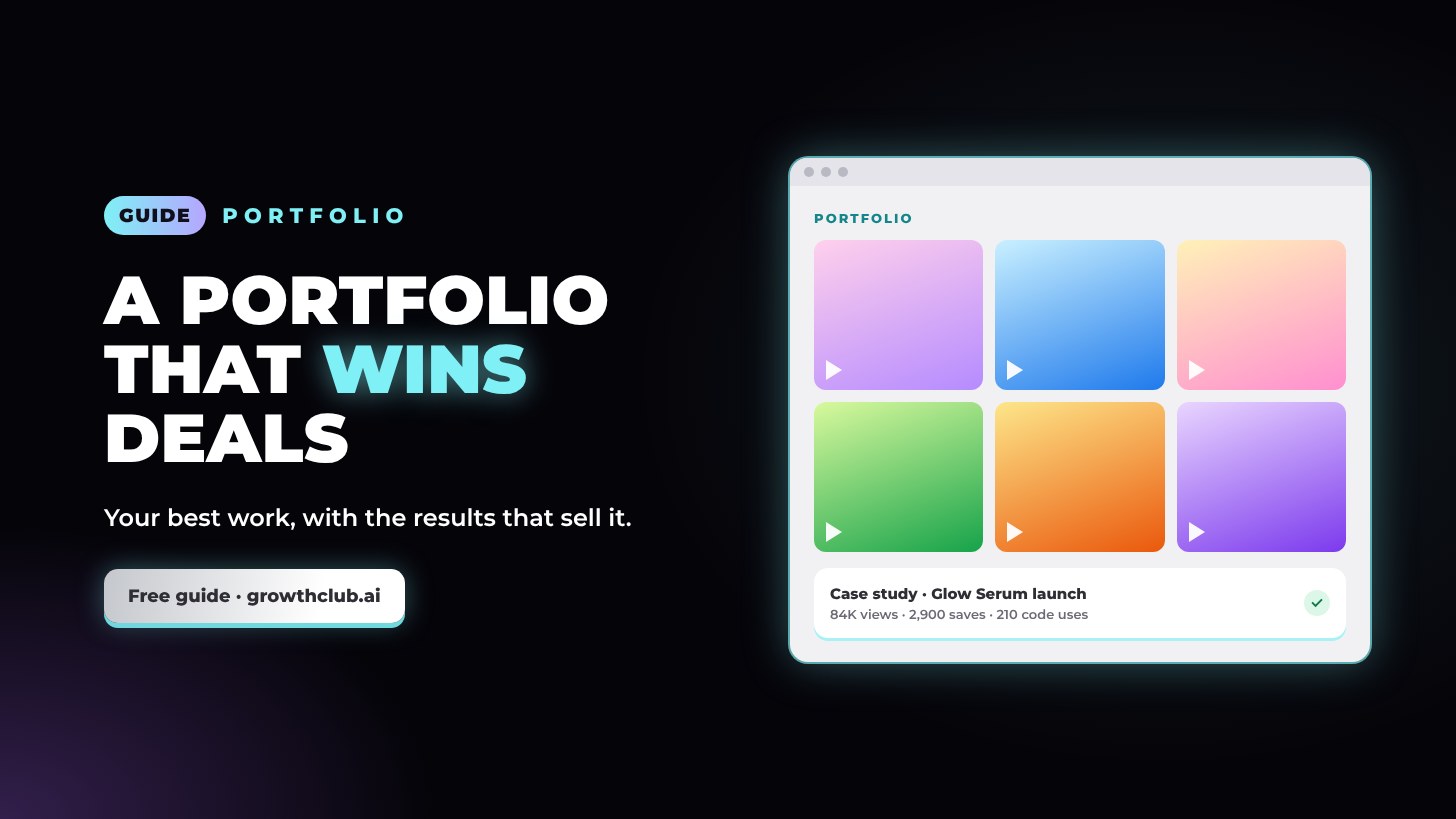
For two to four pieces, add a short case study: the brand, the brief, what you made and the result. “Reel for a skincare launch: 84K views, 2,900 saves, 210 code uses” is far more convincing than the video alone. If the brand shared ad results with you (lower cost per click, higher click-through rate), include them with permission.
5. Services and prices
What you offer: UGC videos, hooks and variations, photography, voiceovers, editing, sponsored posts. Add “from” prices if you want to filter out low budgets (UGC rates).
6. Brands you’ve worked with and testimonials
Names, plus logos only if the brand has agreed, and one or two short quotes from clients who’ve said you can use them.
7. Contact
Email, location and a link or QR code to your full work.
How to build a portfolio with no clients yet
Every UGC creator starts here. Make spec work: content made as if a brand had hired you.
- Pick 3 to 5 products you already own in your niche.
- Make one video for each, each in a different style (unboxing, tutorial, testimonial, problem and solution, aesthetic B-roll).
- Write a quick “brief” for each so you can describe it like client work.
- Label them clearly as personal projects, not paid work.
Spec work shows exactly what a brand would get, which is all they need to decide.
UGC portfolio specifics
Brands buying UGC are buying ads. Show them you understand ads:
- Hooks: show two or three versions of the first three seconds for the same video.
- Aspect ratios: 9:16 for Reels, TikTok and Stories; mention you can deliver 4:5 and 1:1.
- Captions and on-screen text that’s readable without sound.
- Raw and edited versions, if you offer raw footage.
- Fast turnaround if you can offer it.
Our guide on how to become a UGC creator covers the full process.
Where to host your portfolio
- A link (a portfolio page you can update any time) for emails and your bio.
- A PDF for brands that need to attach it to briefs.
- Video files on a shared drive for full-quality viewing, linked from the portfolio.
Put your best work in a portfolio brands can scroll: covers, galleries, results and a share link, ready in minutes. Brands only ever see you.
Create my account and try itIt’s free with a Growth Club account.Frequently asked questions
What should be in a UGC portfolio?
Six to twelve of your best UGC videos showing different styles and hooks, short case studies with results, an About section, the services you offer, brands you’ve worked with and contact details.
How do I make a portfolio with no experience?
Create spec work: three to five videos for products you already own, each in a different style, made as if a brand had briefed you. Label them as personal projects.
Is a portfolio the same as a media kit?
No. A media kit sells your audience (followers, views, demographics). A portfolio sells your content and skills. UGC creators especially need a portfolio, because brands buy the content, not the audience.
How many pieces should a portfolio have?
Six to twelve strong pieces is enough for most creators. Show range within your niche and put your best work first.
Should I include results in my portfolio?
Yes, wherever you can. Views, saves, clicks, code uses or ad performance turn nice content into proof. Ask clients for permission to share their numbers.
Good to know: this guide is general information, not legal, tax or financial advice. Rates and earnings are estimates, not promises, and platform rules change, so check the official pages we link to. Instagram, TikTok, YouTube, Facebook, Threads, X, LinkedIn and the other names mentioned are trademarks of their owners; Growth Club isn’t affiliated with or endorsed by them.