Money guide
How influencers make money in 2026: every income stream explained
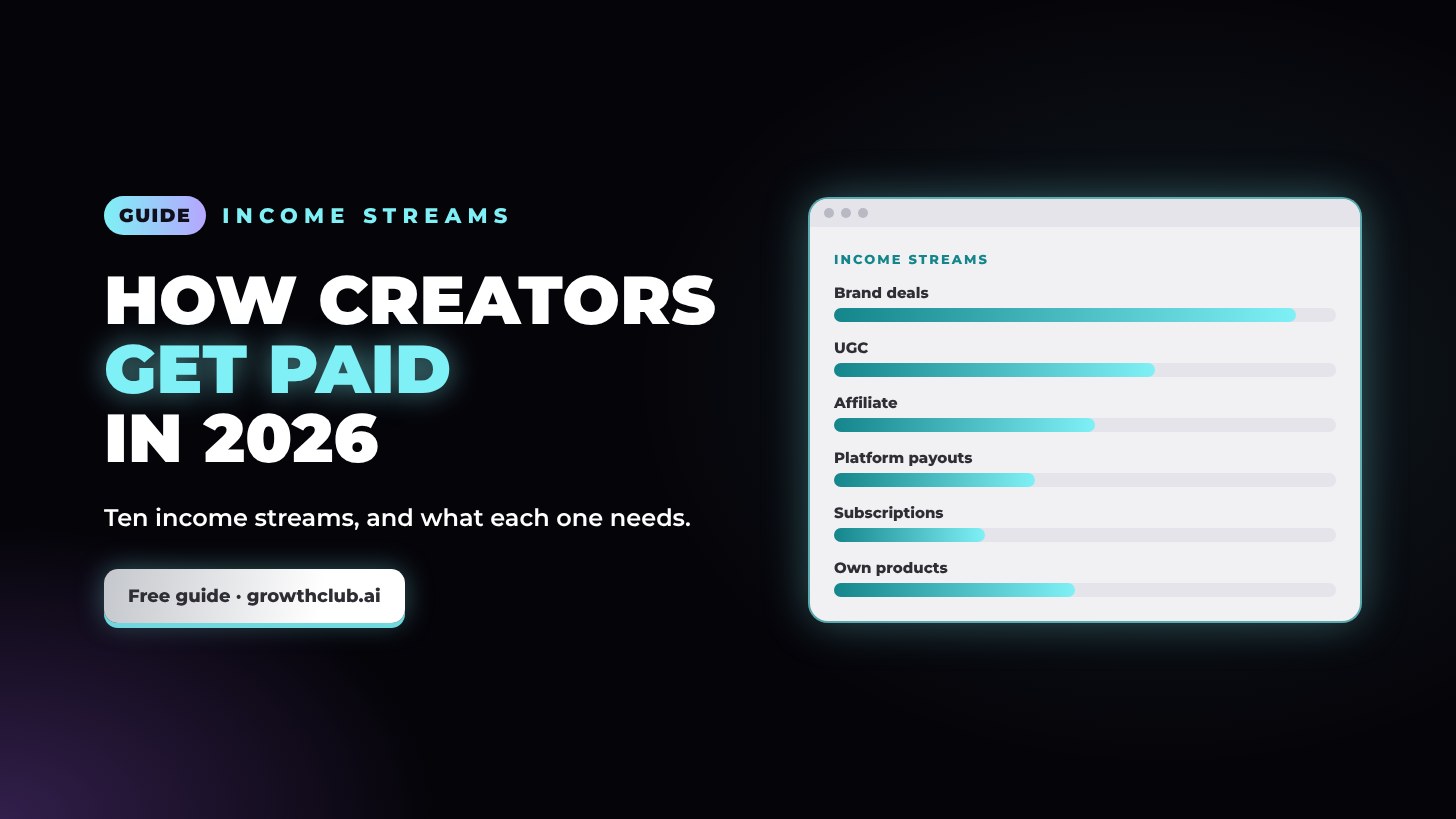
Creators make money in ten main ways: brand deals, UGC, affiliate commission, platform payout programmes, subscriptions, gifts and tips, their own products, services, licensing their content, and long-term ambassador retainers. For most creators, brand deals are the biggest earner, and most combine several streams so one platform change is less likely to cut their income. Here’s how each stream works, what it needs and who it suits.
The reality check
Most creators earn modest amounts, especially at the start. In CreatorIQ’s 2026 survey of 5,095 creators, 67% made under $10,000 a year, and about one in five said 2026 was their first year working with brands (Marketing Dive). The creators who earn more usually stack several income streams and treat it like a business.
1. Brand deals (sponsored content)
Brands pay you to feature their product in your content. It’s the biggest earner for most creators, and there’s no follower minimum for direct deals. On Collabstr’s marketplace, the average final payout per collaboration in 2025 was $193 on Instagram, $186 on TikTok and $255 on YouTube, and larger creators usually charge more per post (Collabstr).
Start here: how to get brand deals and what to charge.
2. UGC (content for brands)
Brands pay you to make videos they post on their own channels and in ads. No following needed. As a rough guide, marketplace averages sit around $150 to $200 per video, plus usage rights (UGC rates). See how to become a UGC creator.
3. Affiliate commission
You earn a percentage of sales through your links or discount codes: brand affiliate programmes, retailer programmes and TikTok Shop (1,000 followers in the US, 500 in the UK, 18+). It works best for product-led content like reviews, hauls and tutorials. Always disclose affiliate links (#ad rules).
4. Platform payout programmes
Platforms pay creators directly based on views or performance:
| Programme | Main requirements (October 2026) |
|---|---|
| YouTube Partner Program (ads) | 1,000 subscribers + 4,000 watch hours in 12 months or 10M Shorts views in 90 days |
| TikTok Creator Rewards Program | 10,000 followers, 100,000 views in 30 days, videos of 1 minute+ |
| Facebook Content Monetization | Invite-only for now (Meta says it plans to open enrolment) |
| X Original Content Rewards | Premium, 500 verified followers, 500K verified impressions in 90 days |
| Snapchat Monetization Program | Invite-only, 50,000 followers + view-time thresholds |
Details: YouTube, TikTok, Facebook, X.
Most platform programmes need you to be 18 or over. If you’re under 18, a parent or guardian usually needs to agree any brand deal or contract and manage payments for you.
5. Subscriptions and memberships
Fans pay monthly for exclusive content: Instagram subscriptions (10,000 followers, 18+), TikTok subscriptions (10,000 followers and 100,000 views in a month), YouTube memberships (from 500 subscribers in the fan funding tier) and Facebook subscriptions. Best for creators with a loyal community.
6. Gifts, tips and badges
Viewers send gifts during LIVEs and on Reels: Instagram gifts (500 followers), Live badges, TikTok LIVE gifts (18+), YouTube Super Chat and Super Thanks, Facebook Stars (500 followers for 30 days). Unpredictable, but it rewards regular live creators.
7. Your own products
Digital products (presets, templates, guides, courses), physical products and merch. Often higher margins than other streams, but you carry the risk and the work. Best when your audience already asks you for help with something specific. Selling to the public also brings consumer law duties: in the UK, for example, clear prices and terms, and a 14-day right to cancel most online orders, with different rules for digital downloads (gov.uk).
8. Services
Coaching, consulting, editing, photography, social media management for brands, speaking. Your content becomes the marketing for your skills.
9. Licensing your content
Media outlets and brands pay to use viral or high-quality clips. Some creators work with licensing agencies; others negotiate directly. Only license clips you fully own (including any music in them), and read the agreement closely: some licensing deals take exclusive rights, so get legal advice before signing a big or exclusive one.
10. Ambassador retainers
A monthly fee from a brand for a set amount of content over several months, often plus commission. The most stable form of brand income. See how to become a brand ambassador.
Building a mix that lasts
- Start with brand deals and affiliate: they can work at any size.
- Add UGC if you’re good on camera or at editing: it doesn’t depend on reach.
- Join platform programmes as you hit the thresholds.
- Build one owned product once you know what your audience asks for.
- Keep your email list or community off-platform, so you’re not dependent on one app. Only email people who’ve signed up, and make unsubscribing easy.
Find brands in your niche, get the contact details they publish, such as partnership and press emails, send ready-written pitches from your own email and track every deal in one pipeline.
Create my account and try itIt’s free with a Growth Club account.Frequently asked questions
How do influencers make money?
Mainly through brand deals, plus affiliate commission, UGC, platform payout programmes, subscriptions, gifts, their own products and services. Most successful creators combine several.
How much do influencers make?
It varies enormously. Most creators earn modestly: 67% of those surveyed by CreatorIQ in 2026 made under $10,000 a year. Creators with large, engaged audiences and several income streams earn far more.
Can you make money with a small following?
Yes, it’s possible: brand deals in a clear niche, UGC and affiliate links can all work with small audiences. Platform payout programmes have higher thresholds.
Which platform pays creators the most?
For direct platform payouts, YouTube’s ad revenue share is the most established. For most creators, though, brand deals pay more than any platform programme, and they’re available on every platform.
Do influencers pay tax on their earnings?
Generally, yes. In the UK, HMRC says creators must include the value of gifts they get for promoting products, not just cash payments, and you usually need to register for Self Assessment if your total income from content and other side hustles is over £1,000 in a tax year. In the US, the IRS says income is taxable whether it’s paid in cash or in goods. Rules vary and change, so check HMRC or IRS guidance or ask an accountant.
Good to know: this guide is general information, not legal, tax or financial advice. Rates and earnings are estimates, not promises, and platform rules change, so check the official pages we link to. Instagram, TikTok, YouTube, Facebook, Threads, X, LinkedIn and the other names mentioned are trademarks of their owners; Growth Club isn’t affiliated with or endorsed by them.